
Decks · fences · pergolas
Wood Staining & Sealing in Jacksonville, NC
We wash the wood back to bare, let it dry, then put the color and the protection back on. Same crew, one job, two visits.
The same deck, ten days apart
Washed to Bare Wood, Then Stained
This is one job in Onslow County, shot from the same spot twice. First the deck came back to bare, dry wood. Then we stained and finished it.
The gray in the first frame isn't dirt — that's what years of weather does to the surface fiber of the boards, and washing is what takes it off. What's underneath is sound wood with no color left in it. The stain puts the color back and gives the water somewhere to bead instead of soak.
- Wash first, always — a finish over a mold film peels, and we won't do it
- Two visits — two to three dry days between, so the wood takes the finish
- Decks, stairs, railings — including the rail spindles, done by hand
- Fences, pergolas & arbors — a sealed fence sheds water instead of drinking it
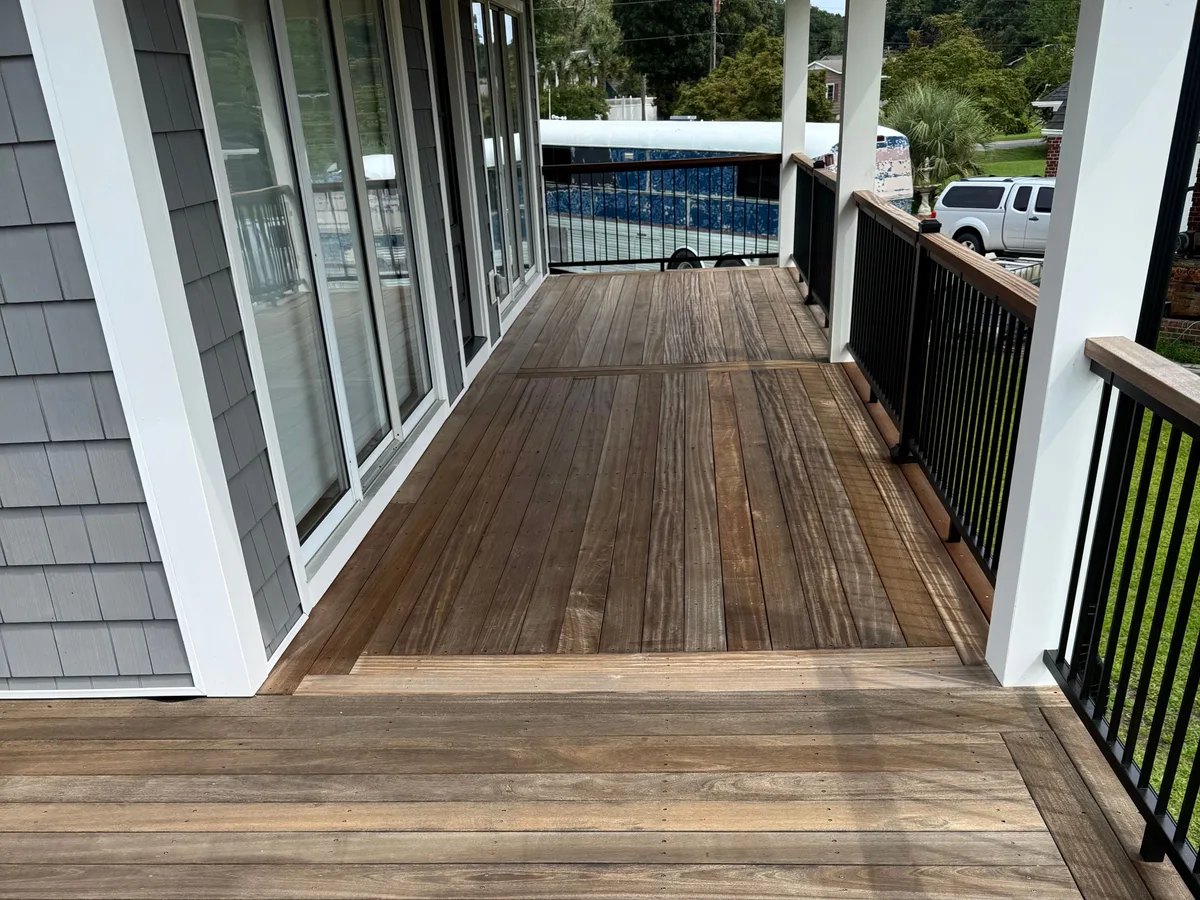
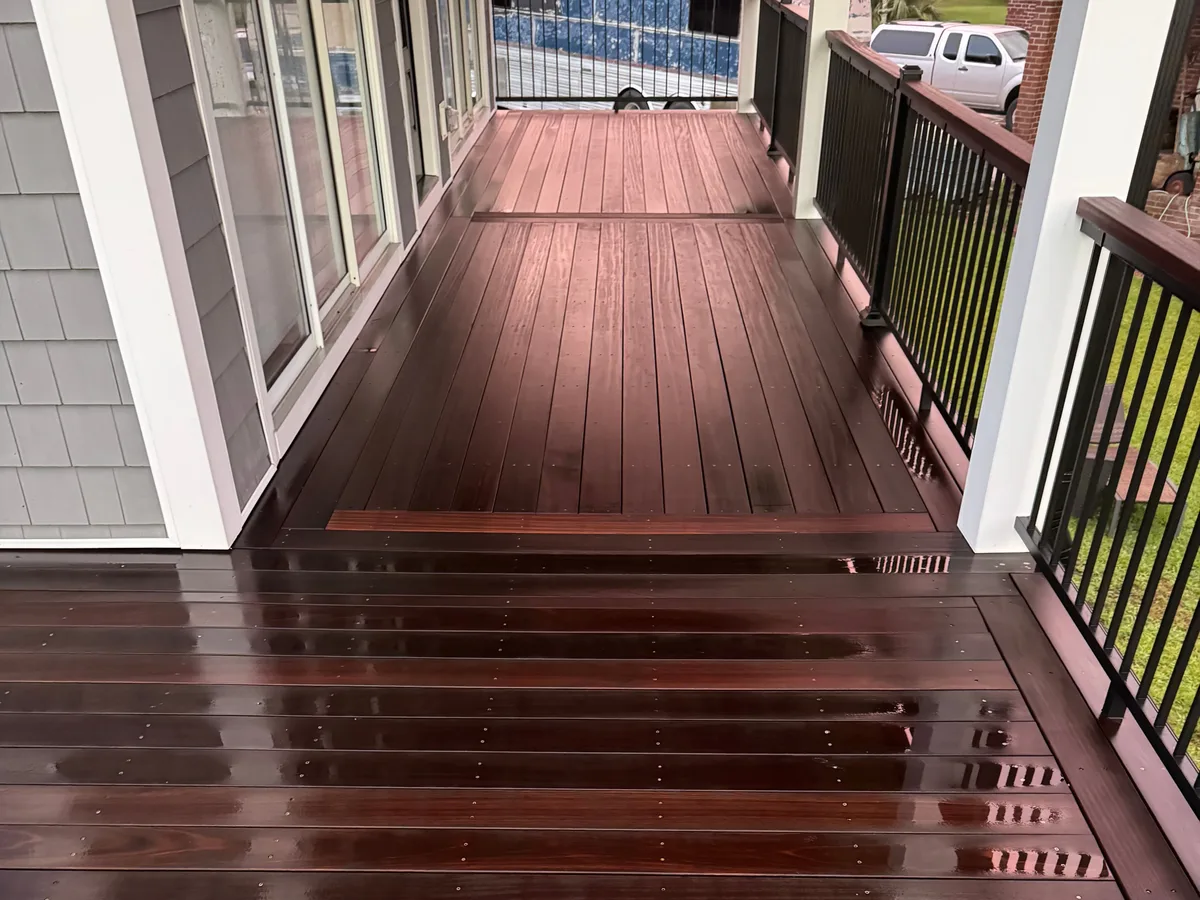
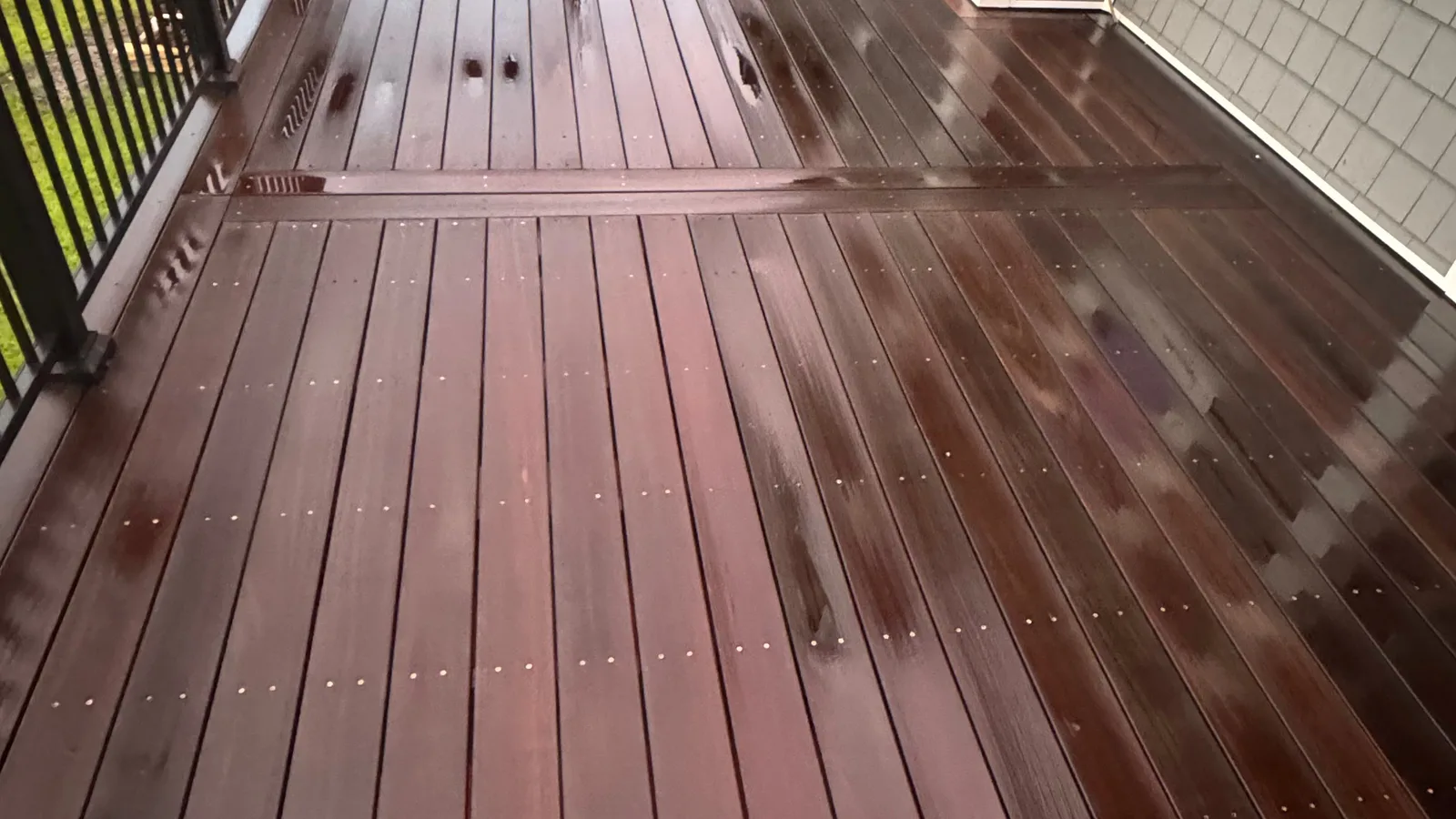
Washed, then stained — Onslow County, NC
Why bother
Color Is the Visible Half
Water Stays Out
Bare wood drinks every rain we get, and wet wood cups, splits and rots. A finish makes the water bead and run off instead — that's the half of the job you don't see.
Sun Does the Damage
UV breaks down surface fiber and turns wood gray in a season. Stain carries pigment that blocks it, which is why a stained deck holds its look far longer than a sealed one.
Cheaper Than Boards
Replacing decking costs many times what finishing it does. Washing and staining on a sensible cycle is the difference between maintaining a deck and rebuilding one.
How it runs
What the Two Visits Look Like
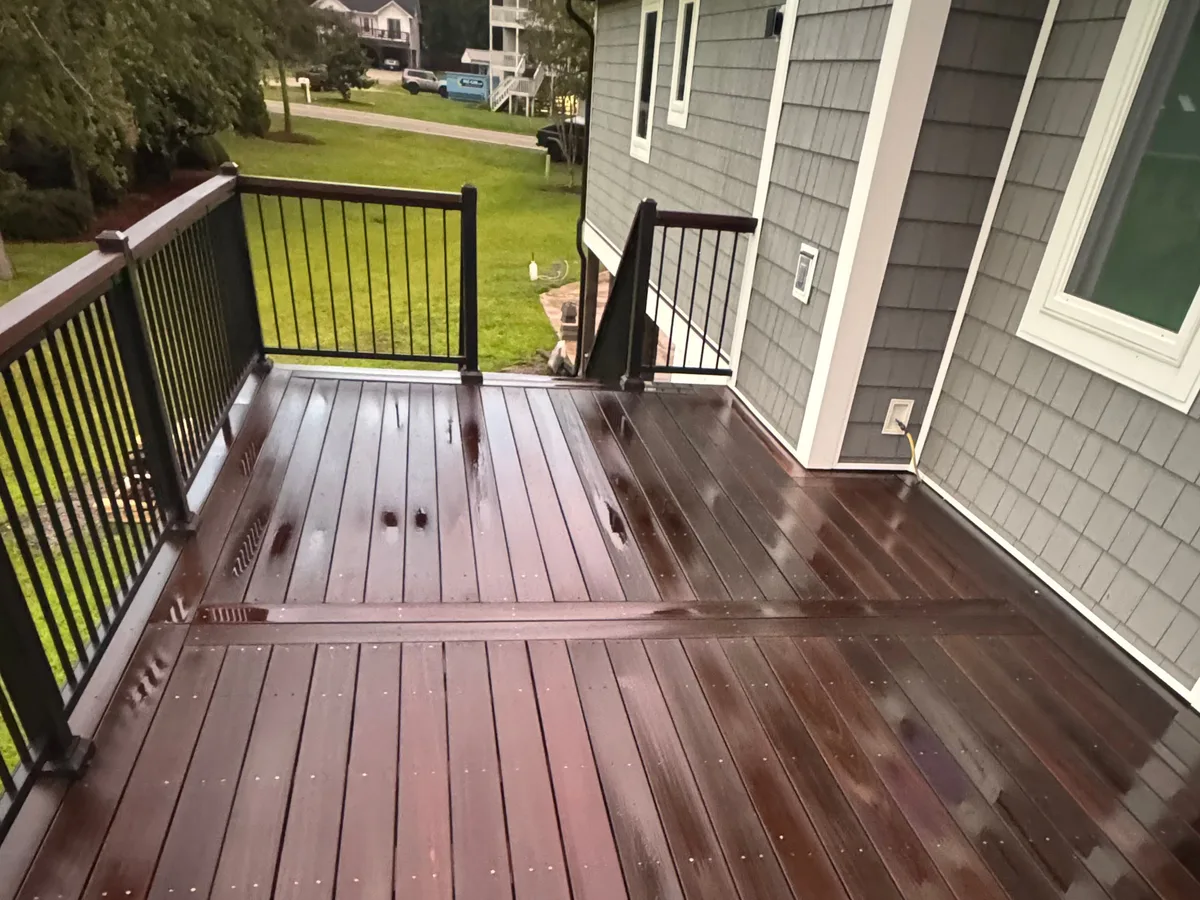
Visit one — the wash. Low pressure and the right solution take off the mold film, the algae and the loose gray fiber. Railings and spindles get worked by hand. Then we leave it alone.
The wait. Two to three dry days. We watch the forecast with you — staining wood that's still holding water is how finishes fail, and we'd rather move the date than do that.
Visit two — the finish. Stain or sealer goes on, worked into the boards, cut in around posts and rail lines. We tell you when it's safe to walk on and when to put the furniture back.
Straight talk
When We'll Tell You Not To
Composite decking doesn't take stain, badly rotted boards need replacing before any finish is worth buying, and a deck that was sealed last season usually just needs a wash. We'd rather say so than take the work.
Good to know
Frequently Asked Questions
Do I have to have the deck washed before you stain it?
Yes, and it isn't an upsell — stain and sealer will not bond to a mold film or to loose gray fiber. Washing is what gives the finish something to hold onto. It's the first half of the same job.
How long between the wash and the stain?
Usually two to three dry days, weather depending. Wood has to be dry all the way through before it will take a finish, so staining is a second visit rather than the same afternoon.
Should I choose stain or sealer?
Sealer is clear or near-clear: it protects the wood and lets the grain show. Stain adds color and UV protection, and hides more of the age in older boards. South-facing decks that take full sun benefit most from stain; shaded fences do fine with either.
How long does it last?
It depends on sun and traffic more than anything else. A shaded fence holds a finish far longer than a south-facing deck walked on barefoot all summer. We'll give you a straight answer for your wood when we quote it.
What can you stain?
Wood decks, stairs, landings and railings, privacy fences, pergolas and arbors. Composite decking doesn't need it — if yours is composite we'll tell you so rather than sell you a finish it can't absorb.
Ready for that just-washed shine?
Free quotes, honest pricing, and a job done right — the first time.